Research Article | | Peer-Reviewed

Native Applications of Desert Date (Balanites aegyptiaca) Tree from the Three Northern Regions of Cameroon

Received: 28 November 2025     Accepted: 16 December 2025     Published: 16 January 2026
Views:       Downloads:
Abstract

The objective of this study was to contribute to the valorization of B. aegyptiaca and local technologies. Local uses were studied in northern Cameroon (Adamawa, North and Far North). A questionnaire was administered in nine locations, three per region. The results showed that the largest number were found along the Far North stretch: Mayo-Kani and Mayo-Danay divisions, extending to the Chadian stretch. Its presence in Adamawa is mainly reported in the locality of Mbe. The name Tanné, in Fulfulde, was the most common name in all three regions. All parts of the tree were used by locals (100% of respondents). Native uses were numerous: food, medicinal, animal feed, domestic, cosmetic, industrial and handicraft. Preparations were based on the pulp. It also appeared that B. aegyptiaca was widely used in the treatment of numerous ailments and diseases. The kernel of B. aegyptiaca had technological potential. Kernel oil was seen to be primarily produced upon demand. A traditional oil extraction process has been described for the first time in Cameroon, to the best of our knowledge. The marketing of B. aegyptiaca fruits and their derivatives was socio-economically important for the population in général, and for women in particular. A detailed traditional oil extraction technique in Cameroon has been described for the first time. This survey provided information on B. aegyptiaca in Cameroon in terms of opportunities, raw material supply and technological possibilities.

Published in Agriculture, Forestry and Fisheries (Volume 15, Issue 1)
DOI 10.11648/j.aff.20261501.11
Page(s) 1-10
Creative Commons

This is an Open Access article, distributed under the terms of the Creative Commons Attribution 4.0 International License (http://creativecommons.org/licenses/by/4.0/), which permits unrestricted use, distribution and reproduction in any medium or format, provided the original work is properly cited.

Copyright

Copyright © The Author(s), 2026. Published by Science Publishing Group

Keywords

Balanites aegyptiaca, Local Uses, Extraction, Oil, Technologies

1. Introduction
Balanites aegyptiaca, also known as desert date, could be classified as a tree in the Balanitaceae family. It was found in Africa and the Middle East . Its height varied between 4 and 10 meters. Its leaves were deciduous and grayish-green. With its extensive root system, it was seen to adapt to most soil types (sandy, rocky, clay) . It could also tolerate high soil salinity. This tree presented a dual root system: surface roots that captured water that fell on the ground and deep roots that extended up to 7 meters to draw water from the ground. The tree was therefore particularly resistant to drought and bushfires. Its fruits were oval-shaped, resembling dates, hence the name desert date. They consist of pulp and seed rich in oil and protein. In Cameroon, B. aegyptiaca was generally found in the Sudanian-Sahelian and Sudanian-Guinean zones. In Cameroon, it still grew wildly and was only harvested by less privileged locals in the North and Far North . Its presence had also been reported in the Adamawa region.
Literature reported numerous studies on the practice, perception and use of the desert date. In Senegal, Sagna et al. studied the distribution range and local uses of B. aegyptiaca in northern Senegal. Sagna et al. also focused their work on the nutritional value of the fruit pulp of B. aegyptiaca. In Chad, Abdoulaye et al. investigated farmers’ understanding of the use of B. aegyptiaca among local populations in the Ouaddaï region. The work of Soloviev et al. examined the physicochemical composition of B. aegyptiaca pulp. In Cameroon, Yougouda et al. worked on the main uses of B. aegyptiaca and the description of its population structure in four localities in the Far North region. Literature also mentioned work on multiple uses of the plant parts (medicinal, food and cosmetic) in Uganda, India, Saudi Arabia, Nigeria and Burkina Faso (1,).
Despite the widespread distribution of this plant in Cameroon, knowledge of B. aegyptiaca used in the northern part of the country remains informal and limited to a few localities in the Far North region. To promote the plant and associated local technologies, it was crucial to obtain more comprehensive information on its various applications. The objective of this study was therefore to investigate the local uses of the plant and the traditional oil extraction techniques in the three northern regions of Cameroon (Adamawa, North and Far North).
2. Material and Methods
2.1. Questionnaire Preparation
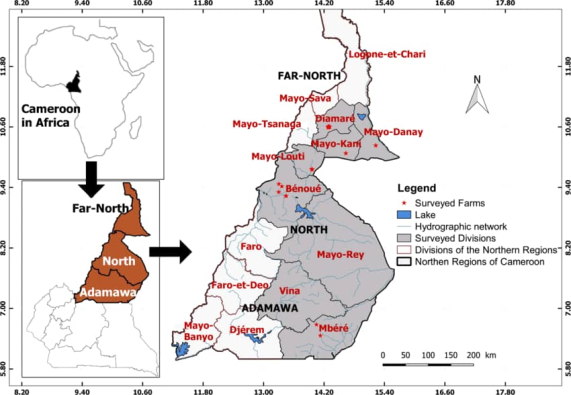
A questionnaire was developed and then administered in the three northern regions: Adamawa; North and Far North (Figure 1). In each region, three localities were selected (Table 1). In the Adamawa region, the localities of Ngaoundere, Meiganga and Mbe were chosen. In the North, Garoua, Guider and Mandara were chosen. Finally, in the Far North, the localities of Maroua, Kaele and Kousseri were selected. The choice of these localities was guided by local information and data from the preliminary survey, which suggested an abundance of these trees in these areas. A translator was available in anticipation of language barriers. In each locality, approximately twenty people of an average age of forty, chosen at random, were interviewed. This criterion of an average age of at least forty years was chosen because of the necessary maturity in the ancestral knowledge of the tree and the associated indigenous technologies. In addition, we had private information that the thorns were used ritually to treat certain illnesses, such as mental ill health. Therefore, those who were below 40 were excluded.
Figure 1. Demarcation of the Study Area by Region.
The questionnaire included general information about the respondent (age, sex, region, department, village), general knowledge of the tree (location of plant abundance in the village, harvesting period and technique, edibility, uses of the different parts of the tree or supply chains), fruit processing and knowledge of the seed oil (extraction technique, use and appreciation).
Table 1. Number of Respondents Per Location.

Region

Location

Number of respondents

Adamawa

Ngaoundere

20

Meiganga

17

Mbe

17

North

Garoua

21

Guider

18

Mandara

17

Far North

Maroua

22

Kaele

18

Kousseri

18

Total

9

168

2.2. Data Analysis and Processing
The (Statistical Package Sociales Sciences version 16.0) software was used for the analysis and processing of the field data obtained .
3. Results and Discussion
3.1. Location
B. aegyptiaca was seen to be found in the three northern regions of Cameroon. However, it is more abundant in the localities of the North and Far North regions, particularly those in the study area (85%). The results indicated that the largest stands of B. aegyptiaca trees were located along a geographical line (Far North region) from the Mayo-Kani and Mayo-Danay divisions to the Chadian stretch. In contrast, it was sparsely populated in the Adamawa region. Its presence was mainly reported in the locality of Mbe (80%). In the two other localities within the study area in the Adamawa region, a sparse number was found. This, according to 100% of those surveyed, could explain why the women who sold this fruit in Ngaoundere primarily sourced their supplies from localities near the northern region. It was also noted that the largest fruits were found in Garoua.
3.2. Different Names for B. aegyptiaca
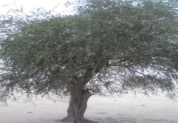
The results indicated that women were the most involved in desert date harvesting activities. In the three regions, 90% of the surveyed population stated they were familiar with the desert date. This proportion was essentially composed of women (approximately 80%). This could be explained by the fact that women and children were mainly involved in fruit harvesting activities. The name Tanné, in Fulfulde, which was the most common name by which it was known (over 72% of those surveyed), was not the only one by which this species was known. The prevalence of this name stemed from the fact that Fulfulde was the common trade language in the three regions. Several other names were given to this tree (Figures 2 to 6) according to the local languages (Table 2). This table was useful for facilitating fieldwork on these fruits in the areas concerned.
Table 2. Local Names of the Desert Date in the Northern Regions of Cameroon.

Local language

Name

Fulfulde

Tanné

Arabe

idilite

Haoussa

Adoua

Kotoko

Zem

Moundang

Tebakamé

Toupouri

Mbaga, Degorfor

Massa

Tchohona

Mafa

Ltaroum

Guiziga

Tagouar

Mandara

Tanné

Guidar

Hérémé

Fali

Cotoum, Korum

Mbum

Djiboko langaou

Laka

Jann

Dourou

Tannéno

Figure 2. Adult tree of B. Aegyptiaca.
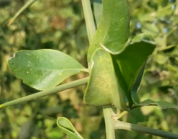
Figure 3. Leaves of B. Aegyptiaca.
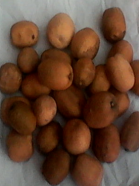
Figure 4. Fruits of B. Aegyptiaca.
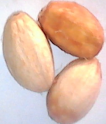
Figure 5. Nuts of B. Aegyptiaca.
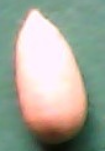
Figure 6. Kernel of B. Aegyptiaca.
3.3. Uses of Different Parts
Most of the interviewees (85%) were familiar with the different growth phases of the plant. Flowering occured at the end of the dry season (April, May and June). The first fruits appeared in June, at the beginning of the rainy season, and reached maturity by September. According to the respondents, the ripe fruits dried on the tree in December. By January, the dried leaves had fallen. They could then be collected by locals, primarily women and children. In some areas, such as Mbe, children climb the tree, using a rope around the trunk, and shake the branches with a hook to make the dried fruits fall. These periods of flowering, fruit ripening and harvesting were similar to those described by Sagna et al.. In all the areas studied, it was generally acknowledged that the trees retained their leaves throughout the year.
According to all respondents, all parts of the tree were used by locals. The fruit was the most used part (100%), followed by the leaves (80%) and the bark (40%).
3.3.1. Leaves
In all the study areas, the use of the leaves for food was reported. Thus, 63% of respondents mentioned using young leaves (boiled) in sauce preparation. The leaves are also used as animal feed. These results corroborated those obtained by other authors (, 6, 8]).
The leaves were also used medicinally. In Ngaoundere, dried and crushed leaves were applied to the skin to treat zoonotic scabies («zoona»). Fresh, crushed leaves were used to dress wounds and to bandage tumors or abscesses among the Toupouri people. This antibacterial and antimicrobial activity of the leaves had also been noted in India by Yadav and Manju Panghal. The leaves were used in decoctions to treat stomach aches. This action has also been reported by some authors , 14, 20]. This decoction was used by the Mbum people in Mbe, the Laka people in Meiganga and the Duru people to treat diarrhea.
3.3.2. Bark, Roots and Thorns
The uses of roots and thorns were mentioned by only 9.5% of those surveyed. Of all the tree parts, bark, roots and thorns were the least used by the local populations in the three regions. However, in the Adamawa region, the bark was boiled and the water collected and poured into a basin. The feet were then placed in the basin. Next, the warm water was poured over the body up to the knees. This was used to treat rheumatism. In the Far North region, the bark was reported to be used as soap. The bark was rubbed in laundry water to produce a lather that served as soap. Indeed, the high saponin content of B. aegyptiaca bark was empirically exploited by villagers for washing their clothes. Regarding the use of thorns, branches were pruned from the trunks and bound together to serve as protection for farms. The roots were used in the treatment of infections and diseases. These results were similar to those of some authors who had identified several diseases treated using the bark, roots and thorns: hemorroids, syphilis, tiredness, constipation, fever and fracture , 1, 4, 8].
3.3.3. Trunk
The tree trunk was used as domestic firewood. The wood of B. aegyptiaca was highly valued because it was easily workable, not brittle and, hardens when properly dried. Therefore, it was used to make handles for agricultural tools, axes, hoes, millet mortars, pestles and tablets for writing Quranic verses. It was also used as firewood. Many other uses had been reported in Cameroon, Chad and Senegal , 6, 4].
3.3.4. Fruits
This was the most commonly used part of the tree. Uses of the fruit were recorded by 100% of those interviewed. As the dried fruit was harvested, it was stored for later use. The thin outer layer (epicarp) protected the fruit. The fruit consisted of the pulp, nut, shell and kernel. The pulp was said to be eaten by children despite its slightly bitter taste.
(i). Pulp
The use of pulp in the preparation of juice, syrup, porridge, flour and cake was mentioned in the North and Far North (52%). It should be noted that porridge and flour were prepared during periods of food shortage (famine). The most detailed description of porridge preparation was given in Kousseri.
The preparation of pulp juice could begin once large quantities of fruits had been collected. The outer skin (epicarp) was removed and the fruit was soaked in a bucket or basin. Sugar could be added, if desired, approximately half a kilogram per ten-litre bucket. The pulp was then manually mashed until the nuts were completely depulped. Finally, the depulped nuts were removed. The resulting juice could then be drunk raw or after the addition of tamarind. Juice produced from the pulp had also been reported (though the preparation method was not described) in Cameroon (), Senegal () and Chad ().
To obtain the syrup, after removing the depulped nuts from the juice, the mixture was boiled in a pot or earthenware jar. The process was complete when the mixture thickened (syrup).
Porridge could also be prepared from the juice. When there was a sufficient quantity of juice, it was poured in a mortar. A few handfuls of pearl millet were added to the mortar, and the mixture was thoroughly pounded. The resulting flour was cooked in water in an earthenware pot to obtain a thick porridge that would solidify slightly upon cooling. The flour could also be added at the end of the juice preparation and consumed as porridge. The preparation of pulp porridge was reported in Chad by Abdoulaye et al. .
To prepare the flour, the outer husk (epicarp) of the fruits was removed by hand. Once there was a sufficient quantity, it was pounded in a mortar. The resulting flour was then sifted. The coarser flour was mixed with the millet and pounded again. This process was repeated until the desired quantity of fine flour was obtained, which would be used to make flatbreads and other derived products.
To prepare pulp cakes, the epicarp of the fruits was removed by hand. The fruit was then placed in a jar of water and boiled for about an hour. The boiled fruit was left to sit overnight. The next morning, the liquid was carefully skimmed off and discarded. The drained fruit was placed on a mat and crushed with a back-and-forth motion of the palm of the hand. This separated the pulp from the nuts. Once the nuts were removed, the pulp adhering to the mat was scraped off using a piece of gourd. This pulp was then formed into small balls about the size of a fist and left to dry in the sun.
The use of the pulp to treat malaria, typhoid fever and intestinal worms was mentioned in all localities of the three study regions. The fruit, with its husk removed, was soaked in a container. The aqueous extract was consumed gradually to treat malaria and typhoid fever. In Ngaoundere, tamarind could be added to the mixture to cleanse the stomach when the mouth was bitter. The use of the pulp for treatment was also reported by Hamilton and El Naiem in Soudan, and by Oumar et al. in Senegal.
(ii). Husk
Once the pulp had been consumed, the nut was obtained. The nut was cracked open with a stone or a wooden block to separate the husk from the kernel. The husk, also known as endocarp, was generally used as fuel. The ash obtained from this combustion could be used to prepare table salt.
(iii). Kernel
The kernel, once separated fron its shell, had several uses. It was consumed after preparation. In an earthenware pot filled with water, the kernels were boiled for about half an hour to allow their membranes to swell. Then, they were removed and crushed by hand to remove the white husk. This operation was carried out on a large wicker tray, and the fallen husks were separated by winnowing. The kernels were then boiled again in clean water for several hours. After this boiling, the water was decantated and poured into a basket. The basket of kernels was soaked overnight in the water. Afterward, the basket was removed from the water and the kernels were emptied onto a mat exposed to the sun. Once dried, the kernels were then ready to eat. These cooked kernels were very popular with both adults and children. This was especially true since they fight against intestinal worms and stomach aches. This result corroborated that obtained by Yougouda et al. and Sagna et al..
All respondents stated they were familiar with the oil extracted from the kernel. Numerous studies have also mentioned the production of this oil , 6, 13, 4]. However, to the best of our knowledge, none of these authors described the oil extraction process. Similarly, although the oil was well known in the study areas, the description of the traditional extraction process had only been properly carried out in Meskine, a suburb of the city of Maroua.
(iv). Kernel Oil Extraction Process
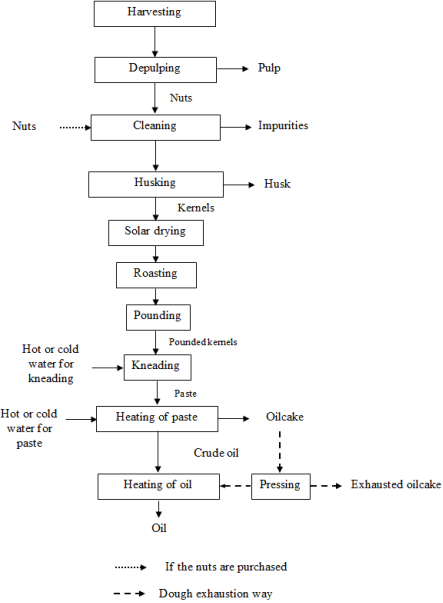
The traditional process for extracting this oil comprised several steps (Figure 7): harvesting; depulping; cleaning; husking; solar drying; roasting; pounding; extraction proper; oil heating. This process used water (hot or cold) as extraction medium. To the best of our knowledge, this was the first time a traditional process in Cameroon had been described in detail.
a) Harvesting
The fruit was generally harvested dry due to the height of the trees. This step can take place either in the farms or near the houses where these trees grow.
b) Depulping
Fruits depulping was carried out using various methods. The pulp was either eaten by children, collected for the production of derivative products, or soaked and removed manually. The nuts were then gathered for further processing.
c) Cleaning and husking
The obtained nuts were cleaned manually to remove sand and other impurities. They were then crushed. The nuts were crushed by hand. The nut was placed on a stone and struck with another stone. The kernel was then separated from the husk. This operation was very arduous and required considerable muscle strengh from the workers because the husk was very hard to crack.
The nuts could also come directly from individual producers or cooperatives. In this case, they were cleaned and husked. In both cases, the broken kernels were sorted and collected. This helped to reduce kernel losses.
d) Solar drying
The purpose of this drying step was to reduce the moisture content of the kernels. In rural areas, this was generally done in the sun, which reduces the moisture content of the kernels to less than 10%. Adequate ventilation or aeration of the kernels during storage ensured a low humidity level and prevents microbial growth. The duration of exposure depended on the intensity of the sun.
e) Roasting
This heat treatment inactivates lipolytic enzymes that could cause oil degradation and facilitated its extraction. Indeed, roasting involved toasting the kernels, thus weakening the oil bearing cells. This facilitated the release of oil during extraction. The kernels turned brown when this process was complete.
f) Pounding
The traditional equipment used in this arduous task was a pestle and mortar. The roasted kernels were then ground in a mortar, usually with a pestle. The pestle exerted friction or pressure on the oilseeds to release the oil at the base of the mortar. For a better yield, the pounding could be further refined with a stone.
g) Extraction proper
This was done by combining kneading and heating the paste. Kneading involved hydrating the ground kernels with hot or cold water. The kernels were pounded regularly and continuously until a paste was obtained. The paste was then placed in a clay pot into which water was gradually added. This process took place at room temperature. The paste was heated with the gradual addition of water. The amount of water in the paste was important because the paste had to remain heavy. A foam formed and it was collected with a spoon as the oil was extracted. This process was repeated until no more oil was extracted. The final hot paste (oilcake) was skimmed by hand to recover the residual oil and it increased the extraction yield. The dough was then drained and compressed by hand into balls.
h) Heating the oil
To purify the cloudy oil, it was heated. This operation also allowed the water to evaporate from the oil. When necessary, filtering through a cotton cloth would further improve the product’s appearance. The oil was then collected and readied for packaging. The packaging method was usually a one-liter plastic (PET) bottle. The extracted oil was sold directly, as production was primarily upon demand.
A similar traditional manual method was described in Chad by Rongead, except that here the water added during extraction was necessarily hot. The same author presented a variant of the manual method: the kernels were placed in a large, traditional rotating wooden mortar or in a fixed mortar system that could be powered by a motor or by a person or animal. The variation in the amount of hot water added during the pounding and extraction (if necessary) processes in Chad can be explained by the long-standing tradition of this technology, passed down through générations. In addition to this, the use of an automated mortar and pestle system would be applicable given the intense economic activity surrounding fruits, nuts, kernels and oil in Chad. Hence, the need for higher oil extraction yields.
Traditional farms produced very low yields (11.5%). Eight kilograms of kernels were needed to produce one liter of oil. Producers obtained kernels from the local market or from villages. In fact, whole fruits were sold, as well as boiled kernels. The measuring tools for raw materials were local (pan (large 2 kg cup), calabashes) (Figure 8). Furthermore, the fruits, nuts and derived products were the subject of significant commercial activity, as already noted by authors in Chad, Niger, Senegal and Mali . Prices varied depending on the location. In Maroua, a pan of fruits costed between 750 and 1,600 FCFA depending on the abundance of fruit and the harvest season. A pan of kernels costs 7,000 FCFA. A liter of oil costed between 25,000 and 30,000 FCFA. This high cost was mainly due to the arduous nature of certain steps in the extraction process. Oilcake was sold between 23,000 and 70,000 FCFA per 50 kg bag (without the lid), depending on the season.
These prices differed significantly from those in Chad. A pan (2 kg) of fruits costed betwenn 200 and 450 FCFA while kernels costed 1,000 FCFA per pan . Also in Chad, in the Melfi area, Rongead mentioned that a pan of fruits costed 75 to 100 FCFA, raw kernels costed around 1,000 FCFA and a pan of washed kernels costed 1,500 FCFA. The price of a bag of oilseed cake ranged from 5,000 to 15,000 FCFA, depending on the season. The price of a liter of oil varied between 2,000 and 3,000 FCFA. This price difference with ours could be explained by the abundant activity around B. aegyptiaca in Chad, but especially by the fact that this Chadian data was not up to date.
Figure 7. Traditional B. Aegyptiaca oil Extraction Process in Meskine.
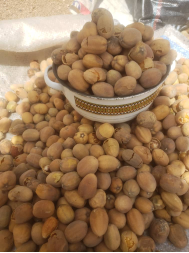
Figure 8. Pan fruits of B. Aegyptiaca.

(v). Uses of Kernel Oil
Kernel oil had culinary uses. It was used as cooking oil. This observation was similar to that of Mohammed et al.. Moreover, Obidah et al. found that it could be consumed safely. In terms of health, kernel oil was used to relieve muscle ache and treat wounds. It was also reported to aid in wound cicatrization. This use was mentioned by Koko et al.. In the North and Far North regions, 65.7% of respondents recognized the oil’s very interesting anti-inflammatory and antimicrobial properties, known for their use in treating rheumatism and certain sexually transmitted infections. It was used to soften and repair dry and damaged skin, as well as dry and brittle hair. It was valued in the care of acne-prone skin. Sagna et al. also reported that in Burkina Faso and Algeria, the oil was used topically to treat eye infections. Traditional methods were green technologies that had no negative impacts on the environment. However, toxicological tests were grounds for perspectives for further research work.
4. Conclusion
The objective of this study was to contribute to the promotion of B. aegyptiaca and local technologies. To this end, a study of local uses was conducted in the three northern regions of Cameroon (Adamawa, North and Far North). A questionnaire was developed and administered in nine locations, three per region. The results showed that the B. aegyptiaca tree was found in all three northern regions of Cameroon. The largest numbers were seen to be located along the Far North: Mayo-Kani and Mayo-Danay divisions, extending to the Chadian stretch. Its presence in Adamawa was primarily noted in the locality of Mbe. Almost all respondents were familiar with the desert date. The name Tanné, in Fulfulde, was the most common name in all three regions.
Most of the people interviewed were familiar with the different growth and production phases of the plant. All parts of the tree were seen to be used by locals. The fruit is the most commonly used part, followed by the leaves and bark. Local uses for most parts of the tree were numerous: food, medicinal, animal feed, domestic, cosmetic, industrial and handicraft. Many preparations rely on the pulp as a primarily ingredient. The kernel of B. aegyptiaca is of technological importance. Kernel oil was primarily produced upon demand. To our knowledge, a traditional oil extraction process had been described for the first time in Cameroon. These findings paved the way for improving local technologies, which would increase extraction yields and producers’ incomes. The marketing of B. aegyptiaca fruits and their derivatives was socio-economically important for the population in general and women in particular. This study provided information on the opportunities, raw material supply and technological possibilities offered by B. aegyptiaca in Cameroon. A detailed traditional technique of oil extraction in Cameroon had been described for the first time, to the best of our knowledge. Therefore, we proposed that the community united into community associations that could purchase grinding machines that could replace the pounding operation unit thereby reducing duration and penibility.
Abbreviations

PET

PolyEthylene Terephthalate

kg

kilogram

FCFA

Francs CFA

Author Contributions
Pauline Victorine Lolo: Data curation, Investigation, Methodology, Validation, Supervision, Writing – original draft, Writing – review & editing
Gilles Bernard Nkouam: Conceptualization, Data curation, Investigation, Methodology, Software, Validation, Supervision, Writing – original draft, Writing – review & editing
Musongo Balike: Formal analysis, Data curation, Methodology, Software, Validation, Supervision, Writing – original draft, Writing – review & editing
Lamine Said Baba-Moussa: Validation, Supervision, Visualization
Conflicts of Interest
The authors declare that there was no conflicts of interest for this article.
References
[1] Chothani, D. L., Vaghasiya, H. U. A review on Balanites aegyptiaca Del. (desert date): phytochemical constituents, traditional uses, and pharmacological activity. Pharmacagn. Rev. 2011, 5(9), 55-62.
[2] Orwa, C., Mutua, A., Kindt, R., Jamnadass, R., Anthony, S. Agroforestree Database: a tree reference and selection guide version 4.0
[3] Tchiegang-Megueni, C., Tchiegang, C., Iyawa, M., Kapseu, C., Noumbissié, J. B., Parmentier, M. Etude des espèces oléagineuses endémiques de la région Soudano-Sahélienne du Cameroun: données ethnobotaniques sur Balanites aegyptiaca. In Proceedings de 2002 3ème séminaire international sur la valorisation du safoutier et autres oléagineux non-conventionnels. Yaoundé, Cameroun, 2000.
[4] Sagna, M. B., Niang, K. S., Guisse A., Goffner, D. Balanites aegyptiaca (L.) Delile: geographical distribution and ethnobotanical knowledge by local populations in the Ferlo (north Senegal), Biotechnol. Agron. Soc. Environ. 2014a, 18(4), 503-511.
[5] Sagna, M. B., Diallo, A., Sarr, P. S., Ndiaye, O., Goffner, D., Guisse, A. Biochemical composition and nutritional value of Balanites aegyptiaca (L.) Del fruit pulps from Northern Ferlo in Senegal. Afr. J. Biotechnol. 2014b, 13(2), 336-342.
[6] Abdoulaye, B., Bechir, A. B., Mapongmetsem, P. M. Utilités socioéconomiques et culturelles du Balanites aegyptiaca (L.) Del. (Famille Zygophyllaceae) chez les populations locales de la Région du Ouaddaï au Tchad. J. Appl. Biosci. 2017, 111, 10854-10866.
[7] Soloviev, P., Niang, T., Gaye, A., Totte, A. Variabilité des caractères physico-chimiques des fruits de trois espèces ligneuses de cueillette, récoltés au Sénégal: Adansonia digitata, Balanites aegyptiaca; Tamarindus indica. Fruits. 2004, 59(2), 109-119.
[8] Yougouda, H., Tchatchoua Tchapda, D., Arbonnier, M., Mapongmetsem, P. M. Ethnobotany and population structure of Balanites aegyptiaca (L.) Delile in Sahelian zone of Cameroon. Int. J. Biodivers. Conserv. 2018, 10(2), 92-99.
[9] Koko, W. S., Galal, M., Khalid, H. S. Efficacité fasciolicide de Albizia anthelmintica et Balanites aegyptiaca par rapport à l’albendazole. J. Ethnopharmacol. 2000, 71, 247–252.
[10] Doughari, J. H., Pukuma, M. S., De, N. Effets antibactériens de Balanites aegyptiaca L. Drel. et Moringa oleifera Lam. sur Salmonella typhi. Afr. J. Biotechnol. 2007; 6(19), 2212–2215.
[11] Dwivedi, A., Joshi, V., Barpete, P. K., Akhtar, A. K., Kaur, A., Kumar, S. Activité anthelminthique de l'écorce de racine de Balanites aegyptiaca (L.) Del. Ethnobot. Leaflets. 2009, 13, 564–67.
[12] Okia, C. A., Kwetegyeka, J., Okiror, P., Kimondo, J. M., Teklehaimanot, Z., Obua, J. Physico-chemical characteristics and fatty acid profile of desert date kernel oil, Afr. Crop Sci. J. 2013, 21(3), 723-734.
[13] Elfeel, A. A., Sherif, Z. Hindi. 2014. Balanites aegyptiaca (L.) Del. var. aegyptiaca seed composition and variability among three different intraspecific sources, Life Sci. J. 2014, 11(7), 160-166.
[14] Oumar, N. G., Sarr, O., Akpo L. E. Richesse de la pharmacopée malinké: rôle médicinal de l’arbre a Khossanto: (Kédougou, Sénégal oriental). J. Appl. Biosci. 2014, 74, 6043– 6058.
[15] Gour, V. S., Singh, A. K., Singh, M. K., Singh, A., Singh, A., Kumar, M. Balanites aegyptiaca (L.) Del.: A review of its traditional uses, phytochemistry and pharmacological properties. Int. J. Green Pharm. 2016, 10(4), S193-S206.
[16] Datti, Y., Tijjani, Y. A., Koki, I. B., Ali, U. L., Labaran, M., Ahmad, U. U., Tasi’u, N. Phytochemical composition of desert date kernel (Balanites aegyptiaca) and the physical and chemical characteristics of its oil, GSC Biol. and Pharm. Sci. 2020, 11(03), 197-207.
[17] Bazongo, P., Ouedraogo, L., Samadoulougou-Kafando, P. M. J., Kiendrebeogo, M., Barro, N. Physicochemical and Biochemical Composition of Balanites aegyptiaca Seed and Seed Oil from Burkina Faso. Food Nutr. Sci. 2023, 14, 1206-1220.
[18] SPSS (Statistical Package Sociales Sciences version 16.0), 2007. SPSS Inc, 1989-2007.
[19] Yadav, J. P., Manju Panghal. Balanites aegyptiaca (L.) Del. (Hingot): A review of its traditional uses, phytochemistry and pharmacological properties. Int. J. Green Pharm. 2010, 140-146.
[20] Karmegam, N., Karuppusamy, S., Mani Prakash, Jayakumar, M., Rajasekar, K. Antibacterial Potency and Synergistic Effect of Certain Plant Extracts against Food-Borne Diarrheagenic Bacteria. Int J Biomed. Pharm. Sci. 2008, 2, 88–93.
[21] Hamilton, J. G. C., El Naiem, D. A. Sugar in the gut of the Saudfly Phlebotamus orientales from Dender National Park, Eastern Sudan. Med. Vet. Entomol. 2000, 14, 64-70.
[22] Rongead. Balanites aegyptiaca. Dossier Technique. 2014, 16 p.
[23] Faye, M. D., Weber, J. C., Mounkoro, B., Dakouo, J-M. Contribution of parkland trees to farmers’ livelihoods: a case study from Mali. Develop Pract. 2010, 20(3), 428-434.
[24] Abasse, T., Weber, J. C., Katkore, B., Boureima, M., Larwanou, M., Kalinganire, A. Morphological variation in B. aegyptiaca (L.) Del. Fruits and seeds withing and among parkland agroforests in eastern Niger. Agrofor. Syst. 2011, 81, 57-66.
[25] Gning, O. N., Sarr, O., Gueye, M., Akpo, L. E., Ndiaye, P. M. Valeur socio-économique de l’arbre en milieu malinké (Khossanto, Sénégal). J. Appl. Biosci. 2013, 70, 5617–5631.
[26] Djondang K., Ehnon Gongnet, E. Contribution des fruits de Balanites aegyptiaca (L.) Del. à l’économie des ménages et à la sécurité alimentaire au Tchad. Afr. Crop Sci. J. 2025, 33(1), 9-20.
[27] Mohammed A. M., Wolf, W., Spiess, W. E. Physical, morphological and chemical characteristics, oil recovery fatty acid composition of Balanites aegyptiaca Del Kernels. Plant Food Hum. Nutr. 2002, 57, 179-189.
[28] Obidah, W., Nadro, M. S, Tiyafo, G. O., Wurochekke, A. U. Toxicity of Crude Balanites aegyptiaca Seed Oil in Rats. J. Am. Sci. 2009, 5(6): 13-165.
Cite This Article
  • APA Style

    Lolo, P. V., Nkouam, G. B., Balike, M., Baba-Moussa, L. S. (2026). Native Applications of Desert Date (Balanites aegyptiaca) Tree from the Three Northern Regions of Cameroon. Agriculture, Forestry and Fisheries, 15(1), 1-10. https://doi.org/10.11648/j.aff.20261501.11

    Copy | Download

    ACS Style

    Lolo, P. V.; Nkouam, G. B.; Balike, M.; Baba-Moussa, L. S. Native Applications of Desert Date (Balanites aegyptiaca) Tree from the Three Northern Regions of Cameroon. Agric. For. Fish. 2026, 15(1), 1-10. doi: 10.11648/j.aff.20261501.11

    Copy | Download

    AMA Style

    Lolo PV, Nkouam GB, Balike M, Baba-Moussa LS. Native Applications of Desert Date (Balanites aegyptiaca) Tree from the Three Northern Regions of Cameroon. Agric For Fish. 2026;15(1):1-10. doi: 10.11648/j.aff.20261501.11

    Copy | Download

  • @article{10.11648/j.aff.20261501.11,
      author = {Pauline Victorine Lolo and Gilles Bernard Nkouam and Musongo Balike and Lamine Said Baba-Moussa},
      title = {Native Applications of Desert Date (Balanites aegyptiaca) Tree from the Three Northern Regions of Cameroon},
      journal = {Agriculture, Forestry and Fisheries},
      volume = {15},
      number = {1},
      pages = {1-10},
      doi = {10.11648/j.aff.20261501.11},
      url = {https://doi.org/10.11648/j.aff.20261501.11},
      eprint = {https://article.sciencepublishinggroup.com/pdf/10.11648.j.aff.20261501.11},
      abstract = {The objective of this study was to contribute to the valorization of B. aegyptiaca and local technologies. Local uses were studied in northern Cameroon (Adamawa, North and Far North). A questionnaire was administered in nine locations, three per region. The results showed that the largest number were found along the Far North stretch: Mayo-Kani and Mayo-Danay divisions, extending to the Chadian stretch. Its presence in Adamawa is mainly reported in the locality of Mbe. The name Tanné, in Fulfulde, was the most common name in all three regions. All parts of the tree were used by locals (100% of respondents). Native uses were numerous: food, medicinal, animal feed, domestic, cosmetic, industrial and handicraft. Preparations were based on the pulp. It also appeared that B. aegyptiaca was widely used in the treatment of numerous ailments and diseases. The kernel of B. aegyptiaca had technological potential. Kernel oil was seen to be primarily produced upon demand. A traditional oil extraction process has been described for the first time in Cameroon, to the best of our knowledge. The marketing of B. aegyptiaca fruits and their derivatives was socio-economically important for the population in général, and for women in particular. A detailed traditional oil extraction technique in Cameroon has been described for the first time. This survey provided information on B. aegyptiaca in Cameroon in terms of opportunities, raw material supply and technological possibilities.},
     year = {2026}
    }
    

    Copy | Download

  • TY  - JOUR
    T1  - Native Applications of Desert Date (Balanites aegyptiaca) Tree from the Three Northern Regions of Cameroon
    AU  - Pauline Victorine Lolo
    AU  - Gilles Bernard Nkouam
    AU  - Musongo Balike
    AU  - Lamine Said Baba-Moussa
    Y1  - 2026/01/16
    PY  - 2026
    N1  - https://doi.org/10.11648/j.aff.20261501.11
    DO  - 10.11648/j.aff.20261501.11
    T2  - Agriculture, Forestry and Fisheries
    JF  - Agriculture, Forestry and Fisheries
    JO  - Agriculture, Forestry and Fisheries
    SP  - 1
    EP  - 10
    PB  - Science Publishing Group
    SN  - 2328-5648
    UR  - https://doi.org/10.11648/j.aff.20261501.11
    AB  - The objective of this study was to contribute to the valorization of B. aegyptiaca and local technologies. Local uses were studied in northern Cameroon (Adamawa, North and Far North). A questionnaire was administered in nine locations, three per region. The results showed that the largest number were found along the Far North stretch: Mayo-Kani and Mayo-Danay divisions, extending to the Chadian stretch. Its presence in Adamawa is mainly reported in the locality of Mbe. The name Tanné, in Fulfulde, was the most common name in all three regions. All parts of the tree were used by locals (100% of respondents). Native uses were numerous: food, medicinal, animal feed, domestic, cosmetic, industrial and handicraft. Preparations were based on the pulp. It also appeared that B. aegyptiaca was widely used in the treatment of numerous ailments and diseases. The kernel of B. aegyptiaca had technological potential. Kernel oil was seen to be primarily produced upon demand. A traditional oil extraction process has been described for the first time in Cameroon, to the best of our knowledge. The marketing of B. aegyptiaca fruits and their derivatives was socio-economically important for the population in général, and for women in particular. A detailed traditional oil extraction technique in Cameroon has been described for the first time. This survey provided information on B. aegyptiaca in Cameroon in terms of opportunities, raw material supply and technological possibilities.
    VL  - 15
    IS  - 1
    ER  - 

    Copy | Download

Author Information